Archive for the 'Illinois' Category

Saint Malachy School sees the light

Friday, December 5th, 2008


Story submitted by the team at Saint Malachy

Everyday sunlight strikes a portion of earth for 7 to 8 hours. Solar energy is the most abundant energy resource in the world. The sun delivers 4 million watts of energy to an acre of surface on a sunny day. If the sun had shown for 8 hours on an acre of soil in your back yard yesterday, it would have received enough solar energy to generate 32,000 kilowatts hours of energy. It would only take about 5.5 acres of sunshine to provide Geneseo with all it’s daily power requirements if we could find efficient methods of converting, storing and transmitting solar energy to electricity for Geneseo residents.

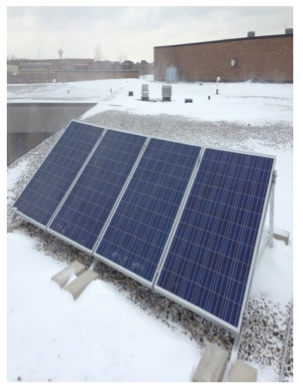
Saint Malachy School students, led by Mrs. Franque’s sixth grade class, are going to study how a photovoltaic cell solar system reaches out to collect sunlight and convert it to electrical power for school use. Classroom lessons designed around a solar energy collector will include mathematics, accounting, chemistry, physics, computer technology, and meteorology. Students will have “hands on” interaction with more ecologically responsible technology tracking how power generation is affected by sun angles, cloudiness, length of day, air temperature, and equipment efficiency.

Illinois Clean Energy Community Foundation granted Saint Malachy School the money needed to purchase and install a new solar collector system and Commonwealth Edison is helping to pay for the teacher training workshops and the Illinois Solar School Program administration. 

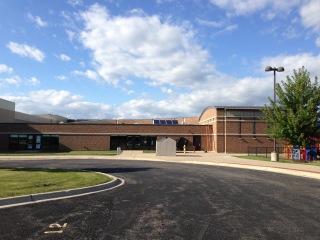
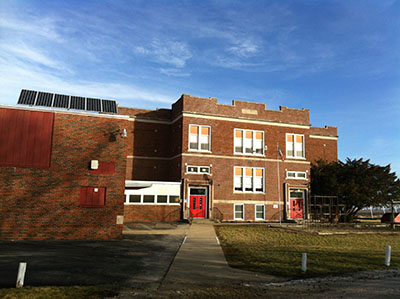
Dave Merrill of Sunair Systems from Byron, Illinois supplied and installed the new equipment on September 11, 2008. Father Pakula is Pastor of Saint Malachy Catholic Parish and School and Stan Griffin is principal of this K-6 grade parochial school located on I-80 just 20 miles East of the Mississippi River. This beautiful church/school campus is used to educate 120 children with the dedication of 11 teachers and 3 aids. 

Gregg Swanson, Building and Grounds Maintenance Supervisor said that the One Kilowatt System has provided about 55kWh of energy in the first 18 days of operation, saving the Parish almost $11.00. One classroom can be lighted with the power generated by the new solar system on a sunny day.

Other schools in the area who have similar solar collection systems are


  • Logan Junior High School: Princeton, Illinois
  • Alwood School: Woodhull, Illinois
  • Nelson Elementary School: Nelson, Illinois


You may go to the following websites to gain more information on solar collection systems:

www.illinoissolarschools.org

http://www1.eere.energy.gov/solar

Rowe-Clark and Exelon, an Alliance Ahead of the Curve

Saturday, October 11th, 2008


Story by Katie Kizer

In a world where one of the most constant sources of concern is money, and big businesses tend to emphasize profit, a major exception to this rule has emerged.  ComEd, a company owned by Exelon, is pushing for alternatives to the burning of fossil fuels.  The company is conscious of the economic strain on the wallets of hardworking Americans and has allied with a grassroots movement for energy efficient and renewable projects.  Aside from these green developments, Exelon is known for its hydroelectric and nuclear power, and the production of energy from fossil fuels.  One could assume from this list of assets that such a company would support the continued devotion to burning fossil fuels and other mechanisms of power which we hold so dear to our hearts.  However, what Exelon has added to that list is its status as “the largest provider of wind power east of the Mississippi River.”  And while wind is the company’s specialty in regards to renewables, Exelon has also branched out into solar energy.  


When inventions such as electric cars debut in this culture, the first thing many of us say is that it will threaten the automobile industry, and by extension threaten the livelihoods of many hardworking individuals.  As the harvesting of corn takes off for purposes of Ethanol, we await the cries from big oil.  Likewise, when solar and wind power are used more continuously to supplement energy use, we all turn to energy companies and wait for the protest.  Exelon has done something different.  It has examined all possible options, factored in the well-being of its stakeholders, and decided to aid in the fight to save money and protect our natural world.  This major conglomerate has committed itself to easing the transition from fossil fuels to alternative energies and ComEd has carried out this commitment in the Chicagoland area.  Paying tribute to these sponsors is important because often they are misrepresented as big bad utility companies with nothing but self-interest in mind.

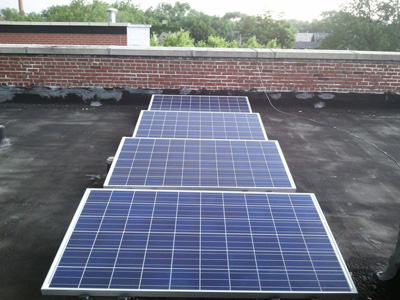
Now a little bit about how this all relates to a solar installation at Rowe-Clark Math & Science Academy, otherwise known as The Exelon Campus of Noble Street Charter School.  Part of the Noble Street Charter Schools, Rowe-Clark is a college prep campus with an emphasis on math and science, located just west of downtown Chicago.  I interviewed Rachel Kramer, Director of External Affairs at Rowe-Clark, who explained exactly how the alliance between the Noble Street Charter Schools and Exelon came about.  “Frank Clark, Chairman & CEO of ComEd, and John Rowe, Chairman and CEO of Exelon, along with Exelon Corporations, invested in Noble to name the Rowe-Clark Math & Science Academy campus.”  Rachel describes the solar installation as a “natural addition” during the renovation process preceding the August 2007 opening.  This is a rare sequence of events in that the school opened its doors for the first time with this renewable energy project already in place.  This is true evidence of solar PV technology becoming engrained within the structure of our nation’s schools.  And what better environment than an accelerated college prep institution with an emphasis on science and math?

Something that I am always eager to learn is how the community in and around the school has reacted to the addition.  It is through these responses that we truly understand the great impact these projects can have.  The truth is that we live in an imperfect world, and even something as sensible as solar can have a rocky start.  Rachel told me about certain frustrations spreading throughout the school while they were awaiting the live online data from the panels.  Everyone was so excited about watching the effects of the project that they felt disillusioned when it was not working properly.  However, Rachel reassured me that “the school community and staff have been very enthusiastic now that our panels are correctly hooked up and we can see the ‘action’ online.”  And of course, a solar PV system in the Midwest is not going to experience as much unadulterated sunlight as those lucky Californians have for their solar schools, so it is natural to feel frustrated throughout the duration of the data collection. 

Illinois Clean Energy Community Foundation provided $10,000 in funding for the solar schools project and there is a web page devoted to this project at www.IllinoisSolarSchools.org where the data on the electricity generation from this system can be viewed.  

The ending to this story is nothing but a happy one.  Like many solar schools choose to do, Rowe-Clark held a solar celebration day filled with activities and games all pertaining to the power of the sun.  This includes “making a solar necklace, decorating a cookie to look like the sun (complete with sun spots), making a mini-model of the building’s solar panels, looking at the sun through a solar telescope, playing solar bingo and more.”  Complete with Exelon volunteers, this solar celebration put the final touch on a truly successful endeavor. 

“At Rowe-Clark, we live the Noble Way, dedicating ourselves to scholarship, discipline, and honor as we prepare our scholars for success in college and beyond.”  And if you read a little further into the mission of this school, you will find that one of the priorities is a will and dedication “to learn in a socially conscious environment,” a promise that has been fulfilled above and beyond all expectation.  The people of Chicago can rest easy that the individuals who matriculate at Rowe-Clarke will certainly become a socially responsible citizenry.

McCracken Middle School: What came first….the economic….or the energy savings?

Thursday, September 11th, 2008


Story written by Katie Kizer

Skokie school district 73.5 began its venture down the energy conservation path just as many other institutions do: retrofitting buildings in order to make its facilities just a bit more efficient.  What this entails is a process in which small adjustments are made to the buildings in order to lessen the daily energy use.  Specifically, District 73.5 installed motion sensors in its three schools within the more common areas to ensure that the lights come on only when individuals are present.  What subsequently took place for the three schools in this Skokie school district is unique in the face of renewable energy trends.  In 2006, both the school board and administrators decided to go forward with a program to install not only motion sensors, but also a “green/planted roof and a thermal solar panel system” on McCracken Middle School says Steve Ruelli, Director of Buildings and Grounds.

After going forward with this energy conservation plan, Mr. Ruelli began to educate himself about the available renewable energy options for the District.  What he learned was that renewable energies serve as invaluable learning tools to the students, in addition to saving money.  What is imperative to emphasize is that this movement began with the intent to save money, and discovered some very cool ways to also help out the planet.  This is a unique sequence of events.  Often times, people begin to feel guilty about the many CNN headlines entitled, “Our Earth in Peril” and begin to entertain the idea of alternative forms of energy and conservation.  After the decision has been made to pursue these alternatives, environmentalists tend to step in and outline the many ways in which institutions can actually save money through this process.  What Steve Ruelli and others from District 73.5 did was pursue these methods because they save money and they are good for the environment.  No convincing needed there.  All that is left is to carry out the project and pass on the success story.   

There are many ways to pass on this knowledge, including the education of all generations about the value of the sun’s power.  On a site visit in Skokie with my father, Glen Kizer, and Mr. Ruelli, I was able to witness the torch being passed on to the upcoming generation.  Jana Jones, Environmental Education K-12 Program Manager of the Marketing & Environmental Programs at ComEd, came out to McCracken to view the installation and discuss the nature of the project.  She brought her son, Hayden, with her to learn a little something about solar.  While he and I shared the same feeling that it was rather early to be out of bed and talking science, his interest was nothing but perked by this invention.  What Hayden and I will one day have in common is that he too will be sitting around with his friends in a class and he will be one of the only kids to have seen a solar installation at such a young age.  I should know, because much of my childhood was laced with tours of green schools and other energy-related projects.  I have memories of, for example, planting trees when I was still in the single digits.  These steps taken by parents like my father and Jana Jones will lead to at least a conviction that we must protect our environment.  While I did not understand this when I was Hayden’s age, I am now incredibly grateful that I was lucky enough to have those experiences.

Mr. Ruelli researched grants available, applied, and was awarded assistance.  Though it is not quite as easy as the snap of one’s fingers, the process of writing a proposal, applying for grants, and carrying out the project is something that any individual with a little motivation and persistence can carry out.  Steve Ruelli proves this through his experiences.  District 73.5 now has a new solar PV system, which is helping to supplement some of the schools’ energy use.  

While this is an excellent jumping off point for these teachers, students, and community, Mr. Ruelli expresses his wish “for a bigger system that could power more mechanicals.”  What is fantastic about this desire is that we only have potential advancement in our future as a society, or as many would say, ‘no where to go but up’ and these systems will only get bigger.  These projects are not designed to replace entire fossil fuel usage; they are intended to demonstrate the capability of renewable energies.  As a university student in Chicago, I have seen firsthand how those who run utility systems are not comfortable with initiating major projects up front without having witnessed the successful results.  And why should they be?  We have burned fossil fuels since the Industrial Revolution, and to rapidly change this tradition is a scary thing.  District 73.5 has the appropriate mentality in that it has installed a smaller end system that can open the door for future grants and funding for a larger system.  Once an institution has evidence of both economic and energy savings, there is more of an opportunity to add on to such projects.  This District is even ahead of the curve in that it is already aware that there are both economic and energy savings with these projects.  Not only do the fine individuals within this District know these facts without any needed convincing, they are craving more.  Steve describes the sentiment upon the completion of this project.  “I really like our system and can’t wait till the students, staff and community are all able to view this at or new addition dedication.”

Solar Energy Blossoming at St. Monica’s

Thursday, August 14th, 2008

Story written by Katie Kizer

One of the most basic relationships in our world is that of a garden and its photosynthetic bond with the sun. Recently, the sun and its blooming kin have taken on an entirely new purpose at St. Monica Academy in Chicago: to power. The Chicago Botanic Garden has joined forces with this flagship school to introduce an initiative to create an entirely green curriculum at St. Monica’s, including a solar installation. St. Monica owes its “Academy” classification to this alliance, as it was awarded by the Archdiocese of Chicago for a “ground-breaking educational initiative,” otherwise known as SEEDS, Student Environmental Education and Development Studies. Developed by the Chicago Botanic Garden and implemented by St. Monica’s, SEEDS is a unique curriculum designed to incorporate “environmental, project-based studies throughout all subjects and grades.” In other words, lesson plans of varying subjects are infused with environmental science and green awareness; a movement that is light-years ahead of its sister schools.

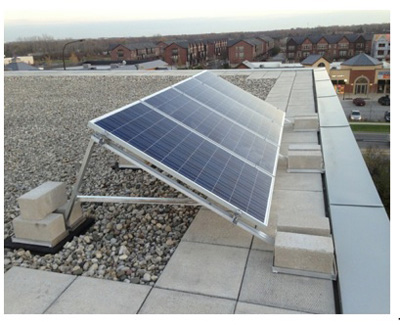
The solar project at St. Monica Academy was also made possible with the assistance of Illinois Clean Energy Community Foundation, Commonwealth Edison, NEED, and the Foundation for Environmental Education. It is a 1 KW solar PV installation on the roof, and it is used to supplement some of the daily energy use. The bonus of these solar installations is that not only are they providing surrounding communities with a positive example of how to utilize green technologies, but the children within the school are growing up with these lessons about renewable energies. They are able to be a part of something that many grown-ups in our world will never experience: watching the actual process in which a solar photovoltaic array captures sunlight and brings it into the classroom. I am confident that I can speak on behalf of all my 21 year-old peers when I say that this experience is way cooler than any build-it-yourself battery project that we ever conducted in junior high science class.

Solar energy is not the only positive contribution that St. Monica’s has made to our Mother Earth. The school is also actively redesigning much of its campus in more efficient and renewable ways. This includes replacing the black pavement with pervious or high albedo pavement, which will allow for less storm water runoff and air conditioning use. This is because of the lightweight nature of the new pavement and its ability to lower surrounding temperatures. St. Monica also plans to plant an extensive amount of new vegetation on the grounds, everywhere from the play areas to sidewalks and the new “Green Roof” which also reduces storm water runoff and increases insulation of the building. The school will also be constructing two new greenhouses, an urban farm within which the students can interact and participate, a native habitat area where wildlife can flourish and individuals can learn about these processes, and many more exciting developments.

The Chicago Botanic Garden played such a critical role in the “greening” of St. Monica both in regards to the physical campus and in the classroom. In fact, none of this would have been possible without the organization’s contribution. The SEEDS curriculum is revolutionary for a private school such as St. Monica, as it is acting as a pilot school for future possible green schools within the Archdiocese of Chicago. Sophia Siskel, the President and CEO of the Chicago Botanic Garden, hopes that SEEDS “provides inspiration and guidance for schools throughout the Archdiocese and beyond.” Additionally, a woman named Anna Viertel of the Chicago Botanic Garden discusses the benefits of the SEEDS curriculum and accompanying ‘green’ renovations. “Time spent working in the school’s gardens and greenhouses will cultivate practical, vocational skills to enrich students’ lives and the lives of their families and communities. By creating an awareness of the world they will inherit, we are preparing them to succeed in it.”

My experiences in writing stories about these projects always differ depending on the level of excitement on behalf of the people involved. After all, such excitement is contagious when you’re talking about such inventive technology. When I conducted my first interview for this piece with a woman named Elaine Harrison, Director of Communications, I was reminded how important this work truly is. I was moved by Elaine’s incredible passion about her work and the great progress that St. Monica has made. She and the rest of the hardworking faculty at St. Monica have such enthusiasm for making the world a better place that I have walked away with a greater sense of self-efficacy and the confidence that this generation will continue to promote green technology into the future.

St. Rita, Progressing into the Future with the Sun as its Guide

Friday, July 25th, 2008

By Katie Kizer, intern at the Foundation for Environmental Education

dsc01322.JPG

The saying, “If it ain’t broke, don’t fix it” may need to be revised to something along the lines of, “If it ain’t broke, that doesn’t mean we can’t make it better” at St. Rita of Cascia High, a college preparatory school for young men located on Chicago’s South Side. The school has been actively working towards advancing its technology within classrooms.  They are working to create a state of the art science wing which will allow for more fruitful learning, including the incorporation of solar PV panels.  A project to install a 1 kW system at St. Rita was recently completed and will allow for faculty members such as Sue Krystof to design classroom lessons around observation of the solar collectors and data collection.  She teaches courses ranging from AP Chemistry to both regular and Honors Physics.  Sue explains how she is going to have her class “hook up to get data so we could measure temperature changes and to monitor the efficiency of the solar collectors.  Then each class would take a week to collect the data.”  It is an exciting development when a science class can not only witness such advanced technology, but interact and learn from it.

Assistant Principal Joe Partacz comments about the school’s outlook on modernization and the motivations behind the solar project. “We at St. Rita feel that we have to stay ahead of the curve technologically in order to give our students the best education possible.  Our faculty is excited about the new beginnings in our science department and we look forward to using the panels this coming school year.”  This mentality fits in nicely with the goal of preparing these young men for higher learning.  The school prides itself on the fact that “students placed in the Academic Program receive the highest quality college preparatory curriculum offered by any high school.”  Additionally, the school has an honors program option for exceptional students who also absorb the benefits of this fine education.  The solar installation has added another dimension to this advanced educational facility.

071129-solar-panel-install.JPG

In addition to the solar PV panels, Assistant Principal Partacz discusses how St. Rita has been “totally gutting out and remodeling our Chemistry labs to make them more state of the art. The new labs with the addition of the solar panels will give our students a better understanding in the field of science.”  All of these changes have resulted in turning a new page in regards to educating the young men about science, an exciting development for the staff at St. Rita High.

We live in a country where our school systems are not standardized, and often our children do not experience new-age technology such as solar installations, so this project is a unique opportunity for the students.  My hope is that when they graduate and move on to their next chapter, they take with them the lessons they have explicitly learned through these science classes and other subjects.  Aside from the ins and outs of energy efficiency, these kids should take with them the knowledge that not all students in the United States are able to learn in such a state-of-the-art environment.  Alumni of St. Rita can one day fight for the opportunity for all children to filter into schools with better resources.  The solar PV panels at St. Rita High are more than a simple modernization tactic: they represent a beacon of awareness for future projects.  We must scoop up both under-funded private schools and the public school districts which fall through the cracks of lower-income neighborhoods and find a way for all children to learn about going green.  St. Rita’s project allows us to stop and remember those who are less fortunate and take it upon the bright and eager young ones of this south side Chicago school to bring all American schools into the new age.

dsc01332.JPG

Lincoln Park Zoo – Chicago, Illinois

Monday, June 16th, 2008

By Katie Kizer (photos provided by Chris Gerke)img_1435_web.jpgFew would debate the fact that a bustling urban neighborhood offers a wide range of learning opportunities.  One could ask, what better way to teach our young children about renewable energy than to take a preexisting learning domain in the middle of a city and install a successful renewable energy project?  In Lincoln Park, a Chicago neighborhood with families and young children, there is a zoo nestled between the water’s edge on Lake Michigan and the city streets.  Lincoln Park Zoo is free to the public, providing an open invitation for children to learn about animals during non-school hours.  A solar project has been installed on the large red barn, located in the Farm-in-the-Zoo presented by John Deere  as part of the Illinois Solar Schools initiative.  So as the kids view goats, pigs, and cows in this farm wonderland, they are also learning about alternative energies.  Parents can bring children to the zoo and large groups can visit without financial burden because admission is free.  People can even avoid the cost of parking if they opt to take public transportation or walk.  These kids are learning, in a fun way, something many parents and teachers work very hard to achieve.  What makes this project so fascinating is that it is a zoo with all the wonderful possibilities just mentioned, and it is part of the Illinois Solar Schools project!  What a refreshing alliance! img_1432_web.jpg When I visited Lincoln Park Zoo this spring, I witnessed endless groups of children making their way through the weaving paths of the farm with wonder and excitement.  I sat for a moment on the bench near the solar project and observed the integration of these learning tools.  Such collaboration between a school and a zoo is inventive and inspirational, paving the way for future public domains to become learning environments for young people.  Installing solar panels at Lincoln Park Zoo is a way to implement the notion of renewable energy into the child’s upbringing, instilling in them a concept that many adults are struggling to grasp even today.Lincoln Park Zoo is also participating in many other green activities, including steps towards emitting fewer pollutants into the air, water and energy conservation efforts, energy efficient adjustments to their buildings, recycling, and many other proactive efforts to set a positive example for the community.  While I was in the visitor center discussing the solar project with the friendly Lincoln Park Zoo staff, I even noticed a battery recycling bin at my feet.  img_1434_web.jpgIt is the little things like this that truly foster education about “greening” within the general public.  So while skipping through the zoo marveling at the zebras and monkeys, the children, along with their parents, are absorbing an enormous amount of environmentalism.  Funding for the Illinois Solar Schools project was provided in large part by Illinois Clean Energy Community Foundation and Commonwealth Edison.  More information about this project including live data is available at www.IllinoisSolarSchools.org 


diazepam intake how fast does valium work online roulette game christian louboutin beige pigalle pumps cheap sublingual viagra generic viagra generic pain pills without prescriptions list of narcotic pain killers sun bingo norvasc 5mg viagra cialis compare loewe orange double pack handbag anti depressant side effects propecia buy legal to order medication on line cheapest place buy viagra online beste casino foreign pharmacys no prescription american soma cheapest price for phentermine gambling resource variations of bingo norco pain medication no deposit flash casino chanel blue hobo canadian pharmacy phentermine online gambling specials generic for norvasc diflucan fluconazole zyban no prescription antibiotic doxycycline fastest way to burn fat amoxicillin dosing tadalafil discount internet casino roulette viagra prices australia salvatore ferragamo white vara bow pumps generic online order viagra best roulette system torrent casino how to win slots yves saint laurent silver tribtoo pumps miu miu red coffer bag medications for anti anxiety tory burch orange tory logo rain boots louis vuitton monogram canvas eva wellbutrin and zyban tablet zolpidem poker practice doctor prescribed diet pills relieve pain in neck online gambling in north carolina cheap medicines propecia merck bingo bingo jimmy choo sky blue saba bag online poker for fun cartier black classic tote cialis brands zoloft online pharmacy valium doseage cheapest phentermine 90 day orders side effects of plavix no prescription valium hermes purple hobo levitra purchase buy tadalafil brand online pain pills online withouth prescription buy viagra in london england ambien shop gambling salvatore ferragamo brown vara bow pumps generic mexican viagra blackjack machine can i buy erectile dysfunction medication best slots to play overnight shipping ambien weight loss prescription ativan and overdose sports gambling internet bingo software hydroxyzine anxiety phentermine no prescribtion needed how to relieve ear pain cialis use chlamydia treatment buy fendi purple snake peekaboo handbag i love bingo teens taking viagra marc jacobs purple shopper hobo order diet pills online strong appetite suppressants programs burning fat fast overnight phentermine louis vuitton monogram idylle neo price of meridia medication prescription buy viagra paypal ativan on line levitra use pmdd medicine fendi wheat crocodile zucca spy bag valentino red snakeskin rose vertigo shopper medications for weight loss online poker hold em ysl blue muse two bag viagra dose better than viagra buy ambien otc usa bingo sites buy atorvastatin craps systems bingo club fendi grey snake peekaboo handbag female viagra over the counter antidepressants buying medication online louis vuitton patent beige sandals effects carisoprodol soma cod online no prescription xanax fedex tadalafil generic phentermine online directory bingos with no deposit bonus lipitor safety bodog casino online cheap cialis generic free samples of cialis valium contraindications louis vuitton monogram vernis purple roxbury drive viagra 50mg zyban effects natural weight loss supplements compare cialis prices meridia prescriptions on line christian louboutin red ernesta sandals online bingo sites by xanax louis vuitton taiga leather black wallet french online pharmacies revatio side effects generic levitra levitra result medicine contain promethazine codeine online three card poker salvatore ferragamo wine varina ballet shoes tory burch ivory snake print reva ballerina flats viagra usage internet gambling act new diet pill to stop obesity