By paddloPayday loans

Maine East HS Solarbration Part 2

September 20th, 2012

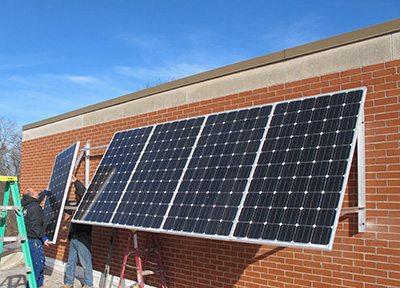
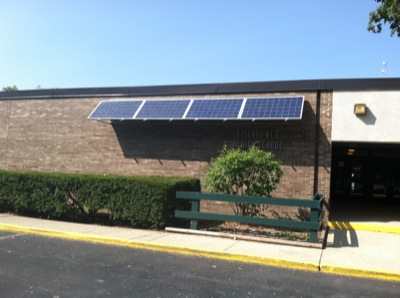
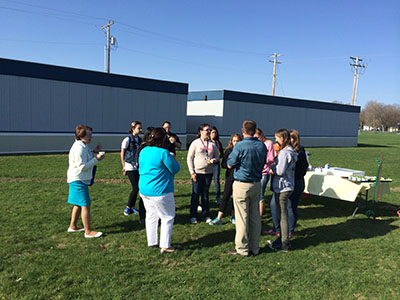
Solar Panels anyone? That’s right! Maine East High School celebrated its rightfully deserved “Solarbration” on Thursday, September13th, 2012. Many students, teachers, and speakers participated in this event not just to celebrate, but to learn all about solar energy. It all started with energy-conscious students who were in the Renewable Energy Club along with East teachers David Schultz and Rebecca Stewart. They took action and made possible the installation of photo-voltaic panels that contribute to Maine East High School’s energy. These panels generate 1 kilowatt of power.

Exactly how do these solar panels work? As sunlight hits the panel with photons (particles of sunlight), it excites electrons which produce electricity. Photo-voltaic solar cells convert the sunlight into energy. This flow of electrons, or energy, is then led into an inverter, which converts the energy into AC power that is distributed to appliances and outlets inside the house, business, or school. AC power is what televisions, computers, and toasters use when plugged into wall outlets. Simple photo-voltaic cells power watches and even calculators. There are 3 types of Photo-voltaic systems: Utility Grid Interconnected, Off-Grid Independent, and Bi-Modal. Grid Connected systems are the simplest and most efficient Photo-voltaic set up. They are connected to the utility grids inside homes. Off-Grid systems operate without using the utility grid by using batteries as storage. These systems are usually used for buildings which are far away from their utility grids. Bi-Modal systems are similar to the Grid-Connected systems but Bi-Modal systems also use batteries as a backup energy source in case the utility grid fails. If the utility power ever goes out due to a storm, Bi-Modal systems can still work off of the backup battery source. It is basically a combination of the first two systems.

So, why should you buy and install solar panels? For one, sunlight is renewable. “My daughter loves to turn on all the beautiful lights in her room even when it is nice and sunny out.” said vice president John Caravette of Earth Wind and Solar Energy. If you have anyone in your family like that, solar panels will save you the money and energy! The panels don’t take much time to install and they last for twenty to forty years. That’s a long time! The solar energy which is converted into electricity also provides hot water for cleaning purposes, showering, and laundry. The energy is affordable and reliable, it is not dangerous to our health, it protects our environment because it does not pollute our land, water, air; and it does emit carbon dioxide unlike fossil fuels (which release large amounts of greenhouse gases such as carbon and methane). Of course, with pros always come cons. The problem is that photo-voltaic panels have a high initial cost. Also, the direct sunlight current has to be converted into an alternative current that is compatible to our homes. They also need electric storage and the grants cost about $8000 while the panels cost about $9000, as Mr. Schultz explained in his presentation at the “Solarbration.” Although these issues do play a big part, in the long run, solar panels really are what is best for the Earth in order to keep it healthy at a sustainable level.

There are currently companies and organizations that are helping in making people aware of solar energy and the power of the sun so that they may one day be convinced to use it. Companies such as Solar Service offer solar systems to install. The Illinois Solar Energy Association (ISEA) is dedicated to helping people pay less for their utilities and create a cleaner environment.

The “Solarbration” ended on a happy note as students left with pizza-filled stomachs, solar cars, and fresh knowledge about photo-voltaic panels. The event was a great success! Go Maine East!

Amisha Patel

Maine East HS Solarbration Part 1

September 20th, 2012

On Thursday, September 13th, afterschool Maine East High School hosted a celebration in honor of solar panels installed the previous summer on the school’s property. The celebration was referred to as a “Solarbration”. Held in the Faculty cafeteria, the event highlighted the benefits of renewable energy as well as gave students a chance to interact with professionals in the field such as representatives from the same company that installed the school solar panels. Maine East Physics Teacher, Dr. David Schultz, gave a brief presentation on the logistical aspects of the solar panels and how they operated. Representatives from two different renewable energy companies spoke about the potential of renewable energy, its efficiency and how the industry was expanding rapidly. After speaking section of the event, the attendees participated in fun activities, one of which was a solar car race. Students also got the opportunity to interact with the representatives from the renewable energy companies on a one-to-one basis as they asked the representatives questions after the presentation. The representatives from the solar energy companies had also set up a stall that demonstrated how many forms of renewable energy worked and included a lot of information regarding the usefulness of this type of energy. Pizza was also served during the event.

During his presentation, Dr. Schultz explained the difficult process and hard work that culminated in the installation of the solar panels. The effort to put in solar panels was an initiative taken by the Maine East Renewable Energy Club. The club originally applied for I L I T grant from the State of Illinois so that they could explore renewable energy. They spent one year examining different types of renewable energies, and even constructed a decision matrix. The result of all this contemplation was the decision that solar energy panels would be the best fit for Maine East. After the Renewable Energy Club had come to that conclusion, they worked on a grant from the Illinois Clean Energy Foundation. The grant was approved and provided the club money for the purchase and installation of solar photovoltaic panels. The total money awarded through the grant to the club was a hefty sum of $8000. Mr. Schultz explained that solar photovoltaic panels work by taking sunlight and converting it directly into electrical energy. He also spoke about different solar panel such as solar thermal panels that focus on light onto liquid, heating the liquid as a result. The solar panels that had been installed generate 1 kW per hour during peak sunlight and add that energy to the Maine East electrical grid, reducing the school’s carbon footprint. Maine East is one of few schools in the state of Illinois and even in the nation to have this renewable energy tool.

Earth, Wind and Solar Energy representative Mr. John Caravette pointed out several of the problems with the current consumption of fossil fuels and how it is contributing to the global warming crisis. Commenting on how renewable energy could offset the consumption of fossil fuels Mr. John Caravette said “renewable energy has become more affordable and efficient. I want to leave the world a cleaner place for my grandchildren and renewable energy goes a long way towards doing that.” He also shared with the audience trends with the kilowatt hours that the Maine East solar panels produced. This was data that was viewed online. Mr. Caravette suggested to the students that they should think about pursuing a career in the environmental field. He spoke about how the environmental field is one of the fastest growing industries in the world.

Lisa Albrecht of the Nile Solar Service also spoke at the celebration. She told students to find their passion. “Find a problem in the world that really makes you mad and work towards fixing it” said Ms. Albrecht. She emphasized how high school students in the audience were at the very important point of their lives, the point at which they were choosing which colleges something which would have a significant impact on the direction of their lives.

The Solarbration was a very well organized event and was attended by not only students from East high school but also by members of the community. The audience had a great opportunity to learn about the environmental field and specifically about different forms of Renewable Energy Club. Credit must be given to the advisors and the members of the Maine East Renewable Energy Club for providing the school and the community with such an opportunity.

Syed Matin

Attea Middle School is newest Illinois Solar School

September 16th, 2012

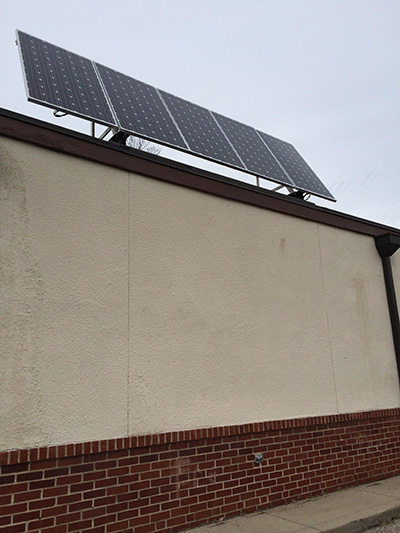
There is a solar school in Glenview, Illinois.  Attea Middle School is located on Chestnut Avenue and if you are driving by you will see 6 Wanxiang solar panels on the top of the roof.  Those solar panels were assembled in Rockford, Illinois and the installation was done by Renewable Energy Alternatives. (REA)

“We absolutely loved working with Dave Ristow of the Attea Middle School,” said Mark  Brezinski of REA in Arlington Heights, Illinois.  In fact, everyone at the school was very nice and enthusiastic and I am sure the students will get introduced to the solar electricity system the day they get to school for the new year.”

The system size is 1.32 kW and the panels are angled at 33 degrees.  The electricity generated by the solar panels is metered by an Enphase Enlighten data system.

“This will be such a fantastic teaching tool for our staff,” said David Ristow (7th Grade Science teacher).  “I know I will start using it this Fall and I am sure the other science teachers on our other teams will as well.”

California: San Joaquin County Office of Education 500 kilowatt Solar Parking Lot Dedication by Barry Scott

May 9th, 2012

On March 29th, 2012, VIPs from around California met in Stockton at the San Joaquin County Office of Education to celebrate the completion of their 500-kilowatt photovoltaic carport project.

Ribbon Cutting

IMG_1180

IMG_1194

This project is significant for a number of reasons.  First, it represents a truly collaborative effort between the district, the business community, two non-profit organizations, and many dedicated teachers and students.

The two non-profit organizations are the National Energy Education Development (NEED) Project, and the Foundation for Environmental Education, both of which were asked by utility provider Pacific Gas and Electric to develop a comprehensive energy education program for K-12 public schools in their service area of California. As a result, the PG&E Solar Schools program was launched in 2004 and has since provided more than 9 million dollars in support to schools in the form of teacher trainings, grants, and solar installations. By 2008, 130 schools had been identified to receive a $25,000 grant to install 1.2 kilowatt educational “systems on a stick”, or grid tied pole mounted modules complete with Internet-based data monitoring.  To this day, the schools are able to monitor production of their own schools and compare it to other schools throughout the state.

Looking for ways to take the Solar Schools program in a new direction, the decision was made to shift from funding many small installations to identifying fewer schools to receive greater support for larger installations, and to include additional and sustained support for the schools, teachers, and students, to learn more about energy and to promote school-based energy efficiency programs such as energy audits, waste and water studies, and improvements in food service and transportation efficiency.

IMG_1201

The San Joaquin County Office of Education was one three districts identified to pilot this new vision.  Pacific Gas and Electric made the commitment to provide a $200,000 grant toward completion of a large photovoltaic system provided that it would be done in a reasonable amount of time. Efforts began in late 2010, when district leaders met to identify three potential building sites on the campus.

A Request for Proposals (RFP) was developed and sent to 18 vendors.  Five of these vendors replied with a number of solutions that included Cash Purchase, Power Purchase Agreement, and Lease Option funding proposals.  The decision was made to build 500-kW system on the western two-acre parking lot to serve the Wentworth Education Center.

IMG_1152

IMG_1151

Unfortunately, before the team came to this determination they learned on December 24, 2010, that California Solar Initiative funds for non-residential projects in the PG&E service area were no longer available. Disappointed but not discouraged, they put their project on the CSI wait list in case funding might be restored.

Funding was the next major decision to be made. Some funding options were better than others, with a cash purchase solution being the most attractive, depending upon the interest rate.  The county employed the expertise of GFSI in Sacramento to critically review the five finalists proposals and the benefits and dangers of each funding solution.

Three of the five responding vendors were selected to provide a more detailed bid on the two-acre site, and asked to respond with a cash purchase price and to include 20 years of Operations and Maintenance, and an extended warranty on the inverters. Further, they were told to disregard CSI incentives in any Return on Investment (ROI) calculations they might include in their bids.

Ultimately, Solar City was the winning competitor. Not only was their price the most competitive at $5.00/watt, their experience in providing the lion’s share of the 125 1kW systems was proof of their ability to perform and their educational Internet-based data page has already become the standard for the Solar Schools program. The district asked Solar City for one tiny additional component: one car-charging station At that time, San Joaquin County had no level-II electric vehicle charging stations, and we thought it would be a perfect complement. Solar City happily acceded to our request! Our final project cost would be about $2,500,000 or $5/watt.

Because this project has such a profound educational component, the district decided to apply for Qualified Zone Academy Bond (QZAB) funding, the same funding that might be used to build a chemistry lab or wood shop.QZAB applications require a 10% match and the $200,000 gift from PG&E would be most of that, but leave us $50,000 shy of our needs. We went back to Solar City to ask what they might be able to do to help us meet this requirement, and after a number of conversations they agreed to add four more EV chargers for a total of five, and to include additional educational support.

In the end, the QZAB was granted and the interest rate on the funds is less than one percent. Below is an excerpt from the application detailing the educational component:

Energy Data Tracking: Students will be able to track, monitor, and analyze the power generated by the solar modules in real time using an Internet-based solar data-monitoring tool. The data can be analyzed by students to identify optimal performance periods and the amount of energy generated. Students will also be able to compare the data from Venture Academy with other schools throughout the State, utilizing the PG&E Solar Schools Program. In addition, the data will be incorporated into the Academy’s math and science courses in regards to graphing the data and calculating the environmental impact of school energy use, and changes in consumption and production by analyzing historical data, determining cost effectiveness of the solar modules, and comparing variables such as temperature and irradiance.

Energy Ambassadors: Students will participate in the development and implementation of energy efficiency and conservation efforts to reduce the schools’ carbon footprint. Students will provide presentations on these efforts to County schools, local businesses and organizations, and SJCOE staff, as a continuing effort to raise awareness of the importance of energy conservation.

Energy Audits: Students will assess SJCOE’s profile with respect to energy and water use, waste management, transportation, and other factors to develop strategies to be more efficient, sustainable, and to work towards carbon neutrality.

Electric Vehicle Charging Stations: Industry partner, SolarCity, will provide five level-two charging stations in support of this project, which will be the first level-two charging stations in San Joaquin County. Students will learn how to maintain and operate the charging stations, and will learn more about the electric vehicle infrastructure. In addition, the stations will integrate with current and planned transportation projects, including building prototype alternative energy vehicles.

Semi-Annual Sustainability Fairs: The laboratory will become the backdrop for sustainability and renewable energy celebrations. Academy students will host these events and staff informational booths, lead educational breakout sessions for attendees, including parents, staff, businesses, and agencies, and other key stakeholders.

Construction began in January 2012 and presented an invaluable opportunity for students that hadn’t even been considered in preparing the QZAB application. In addition to Venture Academy’s 1-kW system on a stick, the campus is home to one of five Pacific Gas and Electric Company sponsored “New Energy Academies”, California Partnership Academies designed to prepare students for advanced studies and careers in the energy sector.

Part of the academic and career educational design of the New Energy Academy is the requirement that students spend time job-shadowing workers in the energy field. The construction of this large project presented the perfect opportunity for students to observe and interact with contractors, and to observe first-hand the construction process from beginning to end. New Energy Academy teacher Jeannine Huffman provided hard hats, safety vests, and protective eyewear to her class before making regular visits to the worksite to observe every step from boring holes for support columns to construction of the steel support structure, placement of modules, and finally the electrical connection of the system through the inverters to the distribution panels. Jerry Kennedy and Jonathan Gornik of Solar City were most gracious in allowing students to come over twice weekly to learn all about the different processes and skills involved in the construction project and to ask different questions of the workers there. A second career academy launching this fall, the Clean Transportation Technologies Academy, will also benefit by studying the generation of this solar project and the usage of the electric vehicle charging stations.

All of these marvelous elements of this project, and more, were celebrated on a sunny Wednesday on March 29th. Special visitors included the California State Superintendent of Public Instruction, Tom Torlakson, Ezra Garrett and Leah Casey, of PG&E, Mary Spruill, Executive Director of the NEED Project, Glen Kizer of the Foundation for Environmental Education, and several elected officials and their representatives. 

Local auto dealers brought electric vehicles, including the Nissan Leaf, a Chevrolet Volt, and an E-Mega manufactured in Stockton by Electric Vehicles International, one of the industry partners of the Clean Transportation Technologies Academy. 

There was even a Tesla Roadster brought to the dedication ceremony by a local owner.

The Tesla owner was kind enough to provide rides to students and teachers, and even gave Superintendent Torlakson a ride!

Tesla

Sierra Middle School’s Solarbration – Bakersfield CA

February 10th, 2012
Sierra’s 20 Kwatt array

Sierra’s 20 Kwatt array

On January 19th Sierra Middle School in Bakersfield California celebrated the official opening of their 20 kilowatt solar array. The array was made possible with a grant of $156,000 from the Pacific Gas and Electric Company Foundation, which sponsors the California Solar Schools Program. Sierra MS and it’s club the Kids for Solar Energy, has been part of the PG&E Solar Schools Program for the past eight years and was awarded the title of Model Solar School and the 20kw array was part of the award. The advisors of the KSE Club are Allison Arnold and Bob Hodash, who have received several grants and have worked together over the past eight years, expanding the after-school club, and its outreach efforts.

A sunny warm day greeted 30 members of the community of Bakersfield, including the Mayor, Harvey Hall, Kern County Supervisor Karen Goh, the BCSD Superintendent Dr. Robert Arias, Shawn Cooper, SeniorDirector of Corporate Affairs for the Pacific Gas and Electric Company, as well as many others, and more than 225 students from Sierra. Speeches were delivered, students demonstrated their skills at converting Solar Energy, and all four local television news shows, two newspapers, and even a radio station, had crews on hand to cover the event.

Ms. Arnold, Mr. Prieto, Mrs. Goh, Mayor Hall, Jesus Fernandez, Mr. Cooper (PG&E), & Dr. Arias

Ms. Arnold, Mr. Prieto, Mrs. Goh, Mayor Hall, Jesus Fernandez, Mr. Cooper (PG&E), & Dr. Arias

The Kids for Solar Energy Club was formed in 2005 at Sierra Middle School for students in grades 6th to 8th. The Club explores ways to use solar power to reduce greenhouse gasses and climate change. The students have used solar energy to cook foods such as: bread, pizza, chicken, and cookies. The KSE members have learned how to convert solar radiation into electricity to power model cars, fans, and lights. Additionally, the Club has explored electric energy consumption by monitoring the amount of electricity appliances consume and making recommendations on using power strips or unplugging unused appliances.

The KSE Club has been very active in the promotion of solar energy and green projects over the last eight years. We have presented at a number of local schools, Earth Day festivals, the Green Expo, Celebrate CSUB, as well as other events. Through our efforts we have educated our students and the public about the importance of saving energy, recycling, and the benefits of renewable technologies.

Another club, which includes many of the same members, Sierra’s Green Team, promotes recycling and has a vow to find a way to recycle most everything. Through this clubs efforts recycling at the school has become a way of life and has spread to many other schools. Over the past two years almost 75 thousand pounds of materials have been recycled. Enough to fill three large classrooms! Items such as batteries, paper, cardboard, cell phone, chip bags, worn out markers, etc. would have been sent to landfills are now being recycled and have raised some serious money for the student body fund. Yes, there are companies that will actually pay you for your used chip bags and other items!

Last year Bob Hodash was awarded the Solar Schools Inspirational Teacher Award, which was presented on the field of the AT&T Park in San Francisco, before a SF Giants baseball game. The award was presented by Leah Casey Program Manager for the PG&E Solar Schools Program and joining them on the field were 25 student members of the KSE Club and Allison Arnold, several other Teachers from Sierra and a BCSD school board member.

Monica

Monica

Kids for Solar Energy cooking with Solar Power Mayor Hall, Monica Ramos & Jessica Carreno

Kids for Solar Energy cooking with Solar Power Mayor Hall, Monica Ramos & Jessica Carreno

Gage Park is a Chicago Public School with Solar Electricity

January 11th, 2012

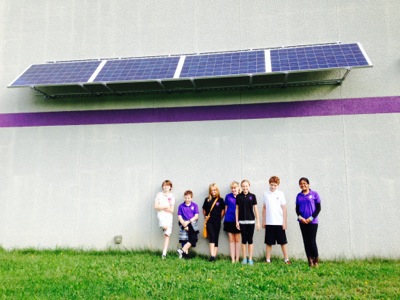
On the South side of Chicago on South Rockwell Street, sits Gage Park High School. From a high perch at the top of the three story building, the six (6) SunTech photoelectric (PV) panels almost seem to be looking down the at the neighborhood. The solar electricity from these PV panels flows into the school and also helps to educate the students. As part of the educational side of this project, there is live data for the students to monitor and the school used curriculum provided by the National Energy Education Development Project (NEED) from a series of teacher training workshops held in Chicago over the past few years. Most of the funding for the solar electricity system and all of the funding for the teacher training workshops came from grants funded by Illinois Clean Energy Community Foundation in Chicago.

According to Gage Park Science Educator Patricia Parsons, “I found that before using this curriculum, students knew very little about solar energy and solar panels. After completing these activities, my students had a better understanding of solar energy, and how it will open up many doors for them in the future.”

The data from the Gage Park High School solar project can be found on the Illinois Solar Schools web site.

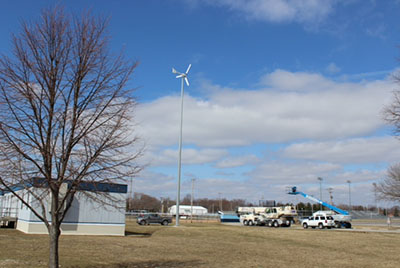
The panels were installed at 35 degree angle on the front of the school so that anyone entering the school can see the panels above their heads.

Gabriela Martin of the Illinois Clean Energy Community Foundation is also happy with the Gage Park High School Solar School Project. “We have a long standing relationship with the Chicago Public Schools and the Gage Park Solar School Project is another example of that partnership. This project also demonstrates how it is possible to connect schools to green energy in a way that will enhance their education in science and math in the short term and may help them find green jobs in the long term. “

Gage Park Solar Panel

Gage Park Solar Panel

Gage Park Kids

Gage Park Kids

Gage Park Gazebo

Gage Park Gazebo


diazepam intake how fast does valium work online roulette game christian louboutin beige pigalle pumps cheap sublingual viagra generic viagra generic pain pills without prescriptions list of narcotic pain killers sun bingo norvasc 5mg viagra cialis compare loewe orange double pack handbag anti depressant side effects propecia buy legal to order medication on line cheapest place buy viagra online beste casino foreign pharmacys no prescription american soma cheapest price for phentermine gambling resource variations of bingo norco pain medication no deposit flash casino chanel blue hobo canadian pharmacy phentermine online gambling specials generic for norvasc diflucan fluconazole zyban no prescription antibiotic doxycycline fastest way to burn fat amoxicillin dosing tadalafil discount internet casino roulette viagra prices australia salvatore ferragamo white vara bow pumps generic online order viagra best roulette system torrent casino how to win slots yves saint laurent silver tribtoo pumps miu miu red coffer bag medications for anti anxiety tory burch orange tory logo rain boots louis vuitton monogram canvas eva wellbutrin and zyban tablet zolpidem poker practice doctor prescribed diet pills relieve pain in neck online gambling in north carolina cheap medicines propecia merck bingo bingo jimmy choo sky blue saba bag online poker for fun cartier black classic tote cialis brands zoloft online pharmacy valium doseage cheapest phentermine 90 day orders side effects of plavix no prescription valium hermes purple hobo levitra purchase buy tadalafil brand online pain pills online withouth prescription buy viagra in london england ambien shop gambling salvatore ferragamo brown vara bow pumps generic mexican viagra blackjack machine can i buy erectile dysfunction medication best slots to play overnight shipping ambien weight loss prescription ativan and overdose sports gambling internet bingo software hydroxyzine anxiety phentermine no prescribtion needed how to relieve ear pain cialis use chlamydia treatment buy fendi purple snake peekaboo handbag i love bingo teens taking viagra marc jacobs purple shopper hobo order diet pills online strong appetite suppressants programs burning fat fast overnight phentermine louis vuitton monogram idylle neo price of meridia medication prescription buy viagra paypal ativan on line levitra use pmdd medicine fendi wheat crocodile zucca spy bag valentino red snakeskin rose vertigo shopper medications for weight loss online poker hold em ysl blue muse two bag viagra dose better than viagra buy ambien otc usa bingo sites buy atorvastatin craps systems bingo club fendi grey snake peekaboo handbag female viagra over the counter antidepressants buying medication online louis vuitton patent beige sandals effects carisoprodol soma cod online no prescription xanax fedex tadalafil generic phentermine online directory bingos with no deposit bonus lipitor safety bodog casino online cheap cialis generic free samples of cialis valium contraindications louis vuitton monogram vernis purple roxbury drive viagra 50mg zyban effects natural weight loss supplements compare cialis prices meridia prescriptions on line christian louboutin red ernesta sandals online bingo sites by xanax louis vuitton taiga leather black wallet french online pharmacies revatio side effects generic levitra levitra result medicine contain promethazine codeine online three card poker salvatore ferragamo wine varina ballet shoes tory burch ivory snake print reva ballerina flats viagra usage internet gambling act new diet pill to stop obesity