Car insurance

Solar Workshop

February 8th, 2011

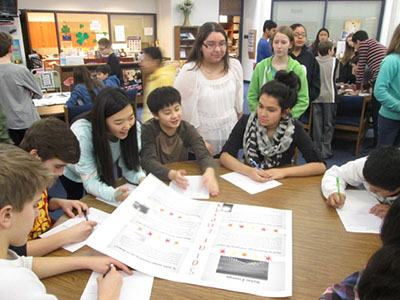
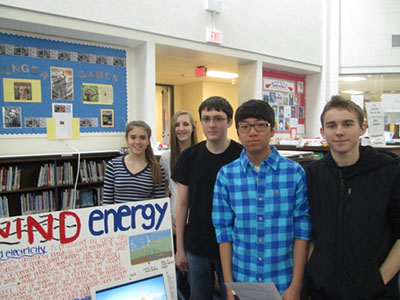
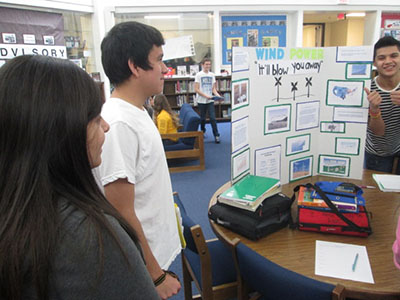
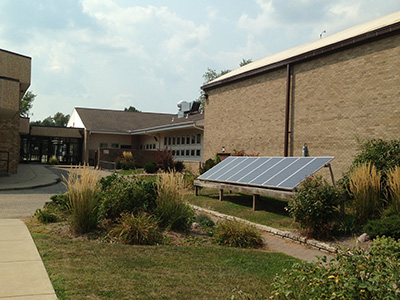
Recently a Walmart Foundation Solar Schools workshop brought teachers, sponsors, and industry leaders together to promote energy education in Minneapolis Public Schools. The workshop was hosted by the National Energy Education Development (NEED) and the Foundation for Environmental Education, thanks to a grant from The Walmart Foundation. The workshop celebrated the completion of 5-killowatt rooftop solar installations on four Minneapolis schools: Olson Middle School, Pillsbury Elementary, Seward Montessori and South High School.

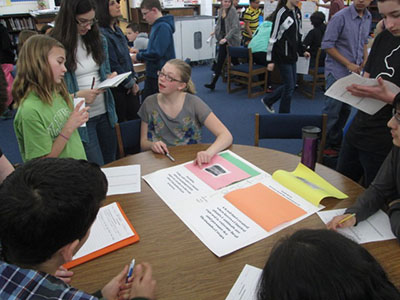
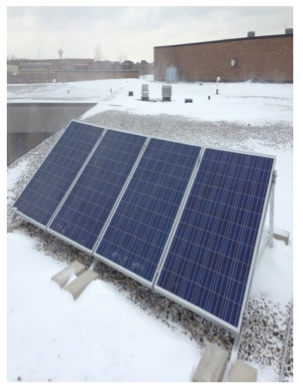
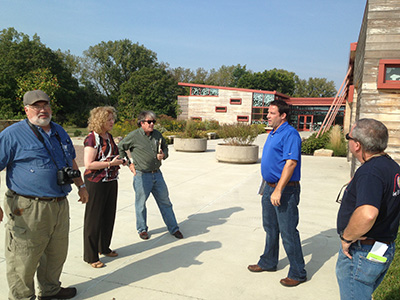
Minneapolis Public Schools science and technology teachers attended the training program to learn how to best use the solar installations and online solar data in their classrooms. The Walmart Foundation sponsored online data monitoring as part of the solar installations and provided hands-on Science of Energy and Exploring Solar Energy NEED kits to all participating teachers. Educators learned about the science of solar , generation of electricity from photovoltaics, and how to integrate this new knowledge into classrooms of all grades and with students of all learning styles. Participants toured Pillsbury Elementary’s photovoltaic solar installation and had a question and answer with Green Circuit, the solar installation company for the schools. While touring the installation, teachers saw first-hand how the panels generated electricity as well as how the panels performed in Minnesota. All panels had shed the snow from earlier that day. During question and answer teachers learned more about the solar industry, the specifics of each school’s installation and the impact solar energy can have on their schools and communities. Participants asked excellent questions about solar on their own homes too.

Minneapolis was honored earlier in 2010 as one of the five solar cities, selected by the Walmart Foundation, NEED and the Foundation for Environmental Education. The four solar schools , teacher training, and corresponding curriculum are a part of the partnership’s extraordinary investment in energy education.

Walmart Solar Schools Minneapolis

Walmart Solar Schools Minneapolis


Walmart Solar Schools Minneapolis

Walmart Solar Schools Minneapolis


Walmart Solar Schools Minneapolis

Walmart Solar Schools Minneapolis


Walmart Solar Schools Minneapolis

Walmart Solar Schools Minneapolis


Walmart Solar Schools Minneapolis

Walmart Solar Schools Minneapolis

Asphalt to Ecosystems: A New Book Documents the Growing Movement Toward Green Schoolyards & School Energy Systems

January 18th, 2011

Glen Kizer, of Energy Seeds and the Foundation for Environmental Education, recently had a chance to talk with author Sharon Gamson Danks about her new book about green schoolyards entitled, Asphalt to Ecosystems: Design Ideas for Schoolyard Transformation (New Village Press, Nov. 2010).

Glen Kizer: “Since schools have classrooms, why do you feel it is necessary or important to make the schoolyard part of the curriculum?  Aren’t schoolyards for play and classrooms for education?” 

Sharon Gamson Danks: Schoolyards are indeed places for play and indoor classrooms have been the usual learning environment for many years—but many schools are now seeing that their grounds can be useful to them in other ways, allowing them to do much more than simply toss a ball at recess. There is a growing global movement that approaches school grounds as a potential resource for learning, play, and ecology—envisioning schoolyards as places to develop a much wider variety of play options, while also enhancing hands-on lessons on many academic subjects, and improving the ecology of their site and the surrounding neighborhood.

Often referred to as “green schoolyards,” “ecological schoolyards,” or “sustainable schoolyards,” these enhanced grounds are being developed at schools that serve students of all ages, from preschool through high school. Their yards are as varied as their geographic locations and curricula, with each school adding teaching resources that meet the needs of their own faculty and students, and reflect the ecology and cultural context of their environment.

Successful green schoolyards can emerge from vastly different climates and sensibilities to include resources that combine ecological improvements with learning goals, including elements such as: organic gardens with fruit trees, vegetables, chickens, and outdoor cooking facilities; wilderness habitats with prairie grasses and ponds, or forest and desert ecosystems; schoolyard watershed models, rainwater catchment systems and waste-water treatment wetlands; renewable energy systems with photovoltaics or wind turbines; and waste-as-a-resource projects that give new life to old materials in beautiful ways. Schoolyards can also be fantastic places for messy art studios, outdoor music and drama performances, hands-on science and math lessons, language and social studies, geography and geology lessons, nutrition education, and other topics. Many schools also develop outdoor classroom spaces of various sizes so that teachers can use their enhanced grounds as effective teaching spaces.

At the preschool and elementary school levels, these enriched, naturalized spaces also provide wonderful, open-ended, imaginative play venues where children can dream up their own games among flowers, trees, and boulders, choose to play sports, or climb and swing, as they like. At all grade levels, green schoolyards can also provide comfortable environments with shade, clustered seating to encourage social gatherings, student artwork, and welcoming signage.

Rosa Parks Elementary

Rosa Parks Elementary

Glen Kizer: “Many schools are now working toward LEED and CHPS standards to green their buildings. How can this work be made more visible to students?”

Sharon Gamson Danks: Meeting LEED, CHPS, and other environmental building standards often improves the environmental impact of school buildings—but it doesn’t automatically improve students’ understanding of their school site or the larger world. School buildings that meet these rigorous environmental standards but don’t explain the exemplary features of their finished building in a way that students can understand are missing out on a vital opportunity to pass an environmental stewardship ethic on to the next generation.

Designers of school buildings and grounds should make sure to include interesting, on-site, interpretive displays that are accessible to students and adults, and explain the purpose of the major environmental features of the building and grounds. These displays can be as simple as a “truth window” in a straw-bale wall or as complex as an electronic kiosk with real-time data updates. All displays should include some written text that explains the value of each improvement being showcased. The best interpretive displays allow students to gather and post their own data about their school site on a regular basis, involving them in tracking the performance of their own environment, and turning students into stewards of their place.

School designers should also seek to engage teachers and school administrators in a dialog about the environmental features of the completed school buildings so that they can support students’ interaction with their environment in the coming years—and become knowledgeable and efficient users of their green building and grounds. Since school communities of administrators, teachers, parents, and students change rapidly over time, each school with green design features would greatly benefit from an engagingly written final report about their building’s construction process and completed design features, written by their architecture and landscape architecture firms. This report should be compiled in non-technical language and include simple drawings or diagrams explaining the project, so that the school can keep it as part of their history. It will also become a resource for ongoing academic lessons related to the performance of their own school site.

Glen Kizer: “What are the range of energy systems you’ve seen on school grounds in your travels to schools around the world?” 

Sharon Gamson Danks: “For schools, energy is a topic that hits close to home. Schools are substantial consumers of energy, using electricity, natural gas and other sources of energy to heat, light, and power school facilities; and most of their inhabitants use fossil fuels to commute to school. Educating today’s students about renewable energy systems and energy conservation practices will help our communities make smarter decisions about tomorrow’s energy needs. Every school has access to sunlight, wind, and other forms of energy, but most are not yet using them as renewable energy resources or educational tools. School communities can engage their students in reducing their facility’s energy footprint, while teaching real life lessons about where energy comes from and what it takes to produce and transmit power. Students can also be encouraged to reduce their transportation-related energy usage by walking and biking to school.” (Sharon Danks, Asphalt to Ecosystems: Design Ideas for Schoolyard Transformation, p.63)

Schools around the world are using a variety of strategies to improve their facilities’ energy footprint. Energy conservation is one of the least expensive and most straight forward techniques, including a range of options such as: passive solar building design, increased insulation, student-led energy audits, natural lighting, and increased shade around the building’s exterior. Some schools engage other energy resources that are available to them such as the sun, wind, and constant ground temperature. I have seen schools that use: solar thermal systems to heat water; photovoltaic and wind-powered systems to produce electricity; and geothermal systems to pre-heat and pre-cool their incoming air and/or water, and reduce the energy required to run their building’s HVAC system. The best of these projects include interpretive displays that explain how the systems function, and help students to track the energy produced and used each day, over time.

Some of these energy systems are quite large, allowing a school to produce as much energy as it uses each year. Other energy projects are smaller, and include things such as a stand-alone solar panel that powers a pond pump system. While it is ecologically preferable to have an energy system that is substantial enough to reduce the building’s impact on the environment, energy systems at all scales can be useful demonstrations and teaching tools if combined with effective interpretive displays and curriculum ties.

In addition to their building and grounds-related energy systems, many schools have companion programs that encourage students to reduce their use of fossil fuels while they travel to and from school. Onsite bike racks and racks for skateboards and scooters help to encourage non-motorized transportation, as do “walking bus” programs, where students meet at a neighborhood location to walk to school together. Carpooling and public transportation are also often elements of fossil fuel reduction efforts for schools.

Sharon Gamson Danks is the author of Asphalt to Ecosystems: Design Ideas for Schoolyard Transformation (New Village Press, Nov. 2010) and an environmental planner and co-founder of Bay Tree Design, inc. in Berkeley, California.

To purchase a copy of this book from the non-profit publisher, please visit New Village Press.

For more information about Asphalt to Ecosystems and Sharon’s work, please see:

Solar Electricity Project in Athens, Ohio

January 5th, 2011

On November 18, 2010, there was a solar celebration in Athens, Ohio to recognize the City of Athens, Ohio for the installation of a 224 kW solar electricity system. At the time of the celebration, this was the single largest municipal photovoltaic (PV) installation inside the State of Ohio. As you can see from the pix, the installation was done in the form of a carport so the solar panels take up no ground space and no roof space while creating protection for the cars in the parking lot. All materials were made in the US and all of the labor was done by Ohio citizens. The cost of the project is $1.9 million. The city has entered into a 20 year power purchase agreement with SolarVision, an Ohio company, buying the power generated by the carport solar array, at a reduced cost, with SolarVision owning, operating and maintaining the array.

Solar Array

Solar Array

There is an online meter that logs the data for the solar electricity being generated by the system.

The installation is located at the Athens Community Center just a few miles from Ohio University.

The 224 kW solar electricity installation is important for a number of reasons including:

Electricity is being generated without pollution. Nothing burns or turns. The system sits perfectly still and will probably generate electricity for the next 20 to 30 years without pollution and without taking up any space.

Cities like Athens, Ohio do not have a lot of cash on hand so financing devices like the power purchase agreement allow municipalities to purchase large solar electricity systems without the need for any capital dollars and without any obligation to maintain or repair the PV system over the next 20 years. This is a great model for other cities and there are many other similar such projects planned throughout Ohio in 2011 and beyond. But Athens was the largest and one of the first such installations.

Parts of the country like Southeastern Ohio have an image as being too cloudy for solar electricity. Rather than argue about the validity of such a statement, the City of Athens put in a system that is almost one quarter of a MW and allows the data to be viewed on line 24 hours a day to prove that Athens, Ohio and Southeastern Ohio are actually great locations for these kinds of solar electricity systems.

Greg Kuss

Greg Kuss

At the solar ribbon cutting/solar celebration, there was a large crowd of on lookers. Athens Mayor Paul Wiehl spoke as did City Council Member Elahu Gosney and State Senator Jimmy Stewart. Dovetail Solar and Wind, an Athens, Ohio company, ran through a series of slides showing the entire installation. American Electric Power (AEP) the local electricity provider was thanked for their participation in the project and AEP was represented by Anthony DeBord, also an Athens, Ohio resident. This project will appear in the AEP Learning from Light Initiative for its educational value to the residents of Southeastern Ohio as well as to students throughout the country who will be able to study the installation using the data link listed above.

SolarVision was represented by my friend Greg Kuss. He talked about how lucky they were to find great local partners and to get state and federal assistance.

“We were fortunate to receive grant funding from the Ohio governor’s office (under the American Recovery and Reinvestment Act’s state energy program),” adds Kuss. “Solar energy has moved into the forefront because of improvements in incentives and technology. Plus, new solar projects are creating jobs. SolarVision will continue to do its part to make more solar projects possible for municipalities by removing all upfront costs.”

But I have known Greg a long time and I know this was his vision and that this installation meant more to him than anyone else in the room. He is one of the founders of SolarVision and he worries about the bottom line as any business person does, but you could tell this project was a labor of love. He kept smiling because he was so happy that the dream he had was finally being realized. He has many many larger solar projects in the works, but I could tell that this one was special. He had teamed with Governor Strickland and Mark Shanahan (who also spoke) and the federal government through stimulus money and the City of Athens and so many others, but when Greg was standing up there at the podium and when he turned the symbolic switch to launch the solar electricity flow into the building it was more like he was adding this solar carport into his list of accomplishments. It may not be as important as his family, but I could tell on that particular day it came pretty close.

athens_2

Installation

athens_3

Solar Vision

Scioto Mile

November 24th, 2010

The Scioto River originates in west central Ohio and travels through the center of the state before spilling into the Ohio River at Portsmouth. For centuries, even millennia, the river has provided sustenance, transportation and recreation for the inhabitants of the region. Prehistoric Hopewell Indians lived along its banks as evidenced by ceremonial mounds found along the route. Civil war refugees used the river as an escape route from slavery. Farmers have utilized the fertile river valley banks for profitable crops of corn and melons. Today, the Columbus Downtown Development Corporation (CCDC), a private nonprofit, is using the river as the focus for a 5 prong redevelopment of the downtown. The CCDC, formed in 2002, is comprised of business and institutional leaders charged with implementing the City of Columbus Downtown Strategic Plan.

Scioto Mile

The plan for the Scioto River is to create a mile long green corridor to attract people to the downtown through a variety of events, thus fostering interest in living and investing in downtown Columbus. One of the core principals has been the marriage of public and private funding of the development. Of particular interest is the participation of American Electric Power. AEP has provided $10 million towards the project. The river front is all about energy . . .energy which is displayed in many different forms- the flowing river, massive new water fountains, the active participation of bikers, hikers, wall climbers and . . .175 solar panels for electrical energy. These solar panels will furnish electricity for a planned cafe and water features.

Scioto Mile

So why would AEP encourage such an investment in alternative energy ? According to Dale Heydlauff, Vice President of Corporate Communications for AEP, it is an outgrowth of AEP’s commitment to giving back to the community. AEP envisioned the development of the Scioto Mile as an opportunity to showcase green technologies, offset operating expenses for some of the major features of the park, and also serve as a catalyst for investment in the area. AEP’s involvement was more far reaching than just the installation of some solar panels. It was a total vision with an eye towards a cleaner, more efficient, greener future. Native plants, bio-retention areas for natural water filtration, and LED lighting will complement the solar energy package. It is an opportunity to educate those who frequent the new park. The area is designed as a destination for families, complete with a playground, pop up water fountains, stages, and a cafe with outdoor dining space. The cafe and water fountains will be powered in part by the solar cells, discreetly placed on the roof of the café and an adjacent public restroom facility. Since the solar cells will not be highly visible in their perch on the roof, a meter will display the amount of electricity being generated.

Vision and leadership are the essential components of this impressive new gathering area designed to entertain and educate the community. The City of Columbus, Ohio and AEP have forged a powerful partnership to lead the community forward towards a greener, healthier environment.

Scioto Mile

Scioto Mile

–Rebecca Milnes

Newton Elementary Goes Solar!

November 24th, 2010

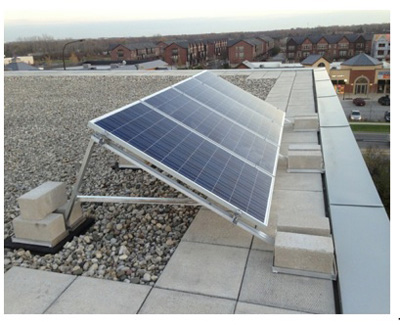
In the Jasper County Community Unit School District #1 in Newton, Illinois, one of the newest schools in the Illinois Solar Schools Program is Newton Elementary School. Their solar electricity or photovoltaic or PV system is 1,020 watts and consists of 6 Sharp solar panels rated at 170 watts each. View the solar electricity generation data showing how much the system at Newton Elementary is producing.

There are 571 students in their district and Phil Benefial the Director of Buildings and Grounds and Travis Wyatt the school principal were the prime movers for the installation.

Jasper Solar Installation

Jasper Solar Installation

According to Phil, “Our entire district is excited about the solar installation. We are so thankful to Illinois Clean Energy for providing us with the grant funds to go forward with this project.”

The project was funded in large part from a grant from Illinois Clean Energy Community Foundation. “We are delighted that Newton Illinois has joined our solar schools program and we look forward to working with them over the next few years to create unique and innovative educational opportunities for their students. They will have a chance to explore the science and math of solar energy in a way that many students never get to do,” said Gabriela Martin of Illinois Clean Energy Community Foundation.

This school, as well as solar schools all over Illinois, can be seen at IllinoisSolarSchools.org

Teacher training workshops will be held in December, 2010. One workshop will be Springfield and the other will be held in Chicago. The National Energy Education Development Project (NEED) is conducting the workshops and the details will be sent out to the school contacts for all of the solar schools in October.

–Glen Kizer

Waters School in Chicago Goes Solar!

October 24th, 2010

By Glen Kizer

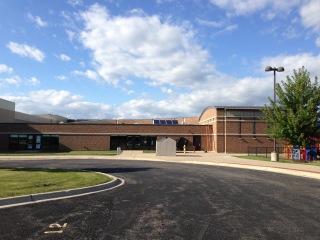
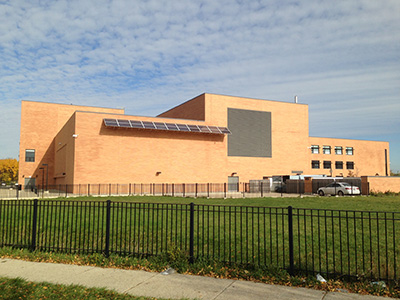
The Thomas J. Waters School in Chicago, Illinois is a little bit unique. It is part of the huge Chicago Public School District and yet it feels like a small school. It has Pre-K, Primary K-3, Intermediate 4-5, and a 6-8 Middle School Program and yet it seems like a small school. But there are 584 students and yet it is has a close knit feel to it. It is a magnet school for the fine and performing arts. The actual name of the school is the Thomas J. Waters Fine and Performing Magnet Arts School. It is located at 4540 N. Campbell and as you can see from the pix it looks like a huge school building and it is larger than many school buildings, but it maintains the small school feel. To further make this point, let’s look at the Welcome from Principal Kipp.

Welcome to Waters!
Welcome to the Waters Elementary web site, where you’ll find a wealth of information about all things related to Waters and the learning and enrichment experiences we offer students.

My goal as the Principal is to instill a lifelong love of learning in each child. We foster this at Waters through a melding of academics, hands-on learning opportunities both inside and outside the classroom and an integrated arts curriculum that exposes students to visual arts, drama, music, technology and ecology. Children learn in many different ways, and this integrated approach has a positive impact on our students’ learning. In addition, we continue to partner with several community organizations and enrichment groups to enhance the Waters experience, including the Shedd Aquarium, CAPE (Chicago Arts Partnership in Education), Mad Science, Global Explorers, and MSA & Circus Arts, among others.

I am very proud of Waters students and am grateful to work with such an extremely dedicated community of learners, parents and staff.

Together, we are continuing to make Waters a unique and inspiring place to learn!

Sincerely,

Titia Kipp

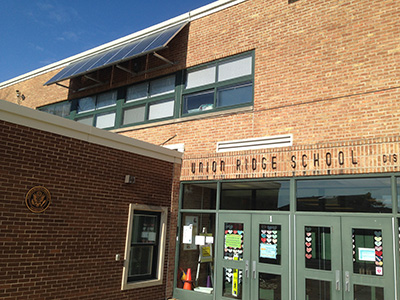
The Waters School has now gone solar. There is a 1 kW installation on the front of the Waters School and the school has joined the Illinois Solar Schools program sponsored by the Illinois Clean Energy Community Foundation. Robert Christensen is the primary contact for the solar program at the school. Robert is the School Engineer. The live streaming data showing how much electricity is being generated and more information about the school will be found on the web site: www.IllinoisSolarSchools.org next week, but we thought you might like a preview of this new solar school installation.
Illinois Solar Schools Waters CPS


diazepam intake how fast does valium work online roulette game christian louboutin beige pigalle pumps cheap sublingual viagra generic viagra generic pain pills without prescriptions list of narcotic pain killers sun bingo norvasc 5mg viagra cialis compare loewe orange double pack handbag anti depressant side effects propecia buy legal to order medication on line cheapest place buy viagra online beste casino foreign pharmacys no prescription american soma cheapest price for phentermine gambling resource variations of bingo norco pain medication no deposit flash casino chanel blue hobo canadian pharmacy phentermine online gambling specials generic for norvasc diflucan fluconazole zyban no prescription antibiotic doxycycline fastest way to burn fat amoxicillin dosing tadalafil discount internet casino roulette viagra prices australia salvatore ferragamo white vara bow pumps generic online order viagra best roulette system torrent casino how to win slots yves saint laurent silver tribtoo pumps miu miu red coffer bag medications for anti anxiety tory burch orange tory logo rain boots louis vuitton monogram canvas eva wellbutrin and zyban tablet zolpidem poker practice doctor prescribed diet pills relieve pain in neck online gambling in north carolina cheap medicines propecia merck bingo bingo jimmy choo sky blue saba bag online poker for fun cartier black classic tote cialis brands zoloft online pharmacy valium doseage cheapest phentermine 90 day orders side effects of plavix no prescription valium hermes purple hobo levitra purchase buy tadalafil brand online pain pills online withouth prescription buy viagra in london england ambien shop gambling salvatore ferragamo brown vara bow pumps generic mexican viagra blackjack machine can i buy erectile dysfunction medication best slots to play overnight shipping ambien weight loss prescription ativan and overdose sports gambling internet bingo software hydroxyzine anxiety phentermine no prescribtion needed how to relieve ear pain cialis use chlamydia treatment buy fendi purple snake peekaboo handbag i love bingo teens taking viagra marc jacobs purple shopper hobo order diet pills online strong appetite suppressants programs burning fat fast overnight phentermine louis vuitton monogram idylle neo price of meridia medication prescription buy viagra paypal ativan on line levitra use pmdd medicine fendi wheat crocodile zucca spy bag valentino red snakeskin rose vertigo shopper medications for weight loss online poker hold em ysl blue muse two bag viagra dose better than viagra buy ambien otc usa bingo sites buy atorvastatin craps systems bingo club fendi grey snake peekaboo handbag female viagra over the counter antidepressants buying medication online louis vuitton patent beige sandals effects carisoprodol soma cod online no prescription xanax fedex tadalafil generic phentermine online directory bingos with no deposit bonus lipitor safety bodog casino online cheap cialis generic free samples of cialis valium contraindications louis vuitton monogram vernis purple roxbury drive viagra 50mg zyban effects natural weight loss supplements compare cialis prices meridia prescriptions on line christian louboutin red ernesta sandals online bingo sites by xanax louis vuitton taiga leather black wallet french online pharmacies revatio side effects generic levitra levitra result medicine contain promethazine codeine online three card poker salvatore ferragamo wine varina ballet shoes tory burch ivory snake print reva ballerina flats viagra usage internet gambling act new diet pill to stop obesity